
HDPE vs LDPE vs PP vs PE: Choosing the Right Plastic Packaging Material
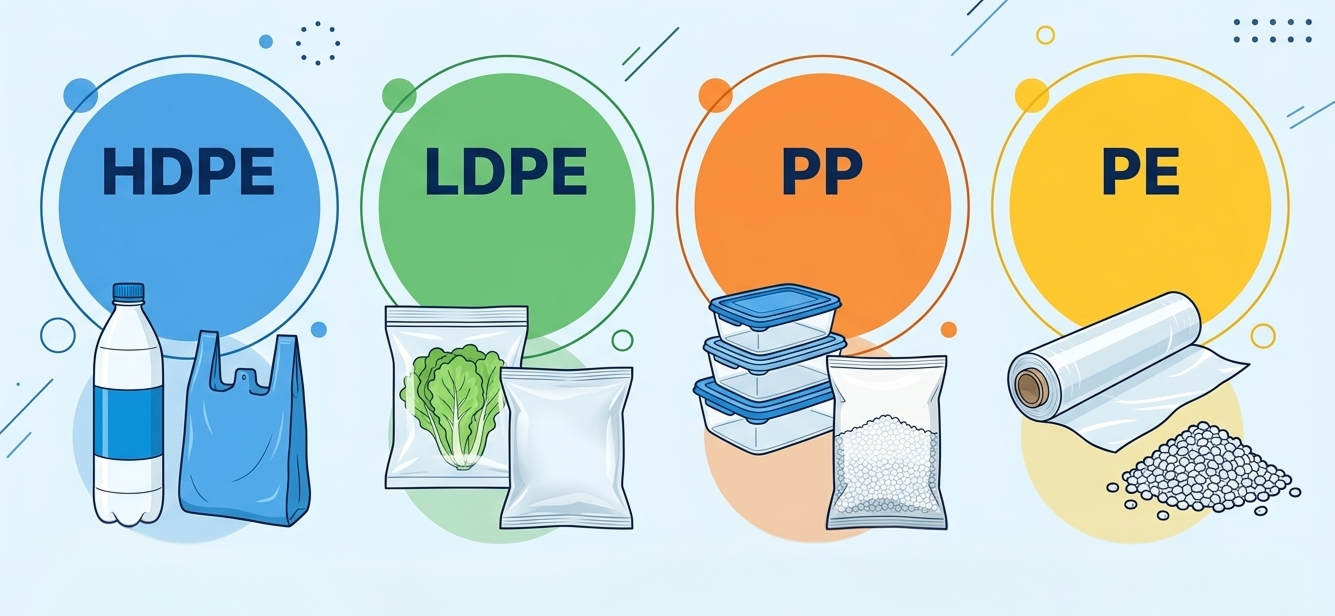
There is no single best plastic packaging material for all applications.
HDPE, LDPE, and PP behave differently in real production and usage conditions. These are the materials most buyers compare when selecting packaging for retail, food, and industrial use.
All of them fall under the broader polyethylene (PE) family, but they perform differently depending on structure and application.
The right choice depends on what you are packaging, how it will be used, and the conditions it must withstand.
In actual manufacturing, material selection is never based on name alone. It is based on performance in handling, storage, sealing, and transport.
Quick Answer: Which Plastic Packaging Material Should You Choose?
| If you need… | Recommended Material |
|---|---|
| Lightweight retail carry bags | HDPE |
| Soft flexible packaging | LDPE |
| Rigid or premium-looking packaging | PP |
| General recyclable PE packaging | PE+PE |
| Frozen food packaging | PA/PE laminate |
| Heavy-duty industrial bags | PE/PE or PP/PE |
These are common selection patterns used in packaging production.
Final material choice still depends on product weight, temperature exposure, sealing requirement, and packaging method.
What Does PE Actually Mean?
PE stands for Polyethylene.
HDPE, LDPE, and LLDPE are all part of the polyethylene family.
They are not separate categories from PE — they are different versions of the same material family, designed for different performance needs.
In packaging production, “PE material” can refer to different grades depending on the application, especially when balancing flexibility, strength, and sealing performance.
Why Material Selection Is Not Just HDPE vs LDPE
In real manufacturing, material is selected based on performance requirements, not preference.
Before choosing a material, we typically look at:
- Product type (dry, frozen, wet, oily)
- Fill weight and load stress
- Storage temperature
- Transport and stacking condition
- Sealing method and machine type
- Required shelf life
- Printing and branding requirement
- Cost target
- Recycling requirement
Material selection is only one part of the full packaging specification.
HDPE (High-Density Polyethylene)
HDPE is a strong and economical polyethylene material with a stiffer structure.
Common Applications
- T-shirt carrier bags
- Grocery bags
- Produce rolls
- Garbage bags
- Light industrial packaging
Why it is used
HDPE performs well when strength is needed with minimal material usage. It is widely used in retail and supermarket packaging because it is cost-efficient and reliable for daily handling.
Limitations
HDPE is less flexible compared to LDPE and has lower clarity for printed branding applications.
LDPE (Low-Density Polyethylene)
LDPE is softer, more flexible, and has better stretch performance.
Common Applications
- Soft retail packaging bags
- Inner liners
- Food ingredient packaging (flour, sugar)
- Flexible packaging structures
Why it is used
LDPE performs better in applications where flexibility and sealing strength are important. It also handles impact and stretching better during manual packing.
Limitations
LDPE is softer and may not provide the same stiffness or structure as HDPE.
PP (Polypropylene)
PP is used when clarity, stiffness, and presentation are important.
Common Applications
- Premium retail packaging
- Snack packaging
- Bakery packaging
- Branded food packaging
- Display packaging
Why it is used
PP provides better transparency and a more rigid appearance. It is often selected when shelf presentation and product visibility are important.
Limitations
PP is less flexible compared to polyethylene-based materials and is not always suitable for heavy-duty packaging.
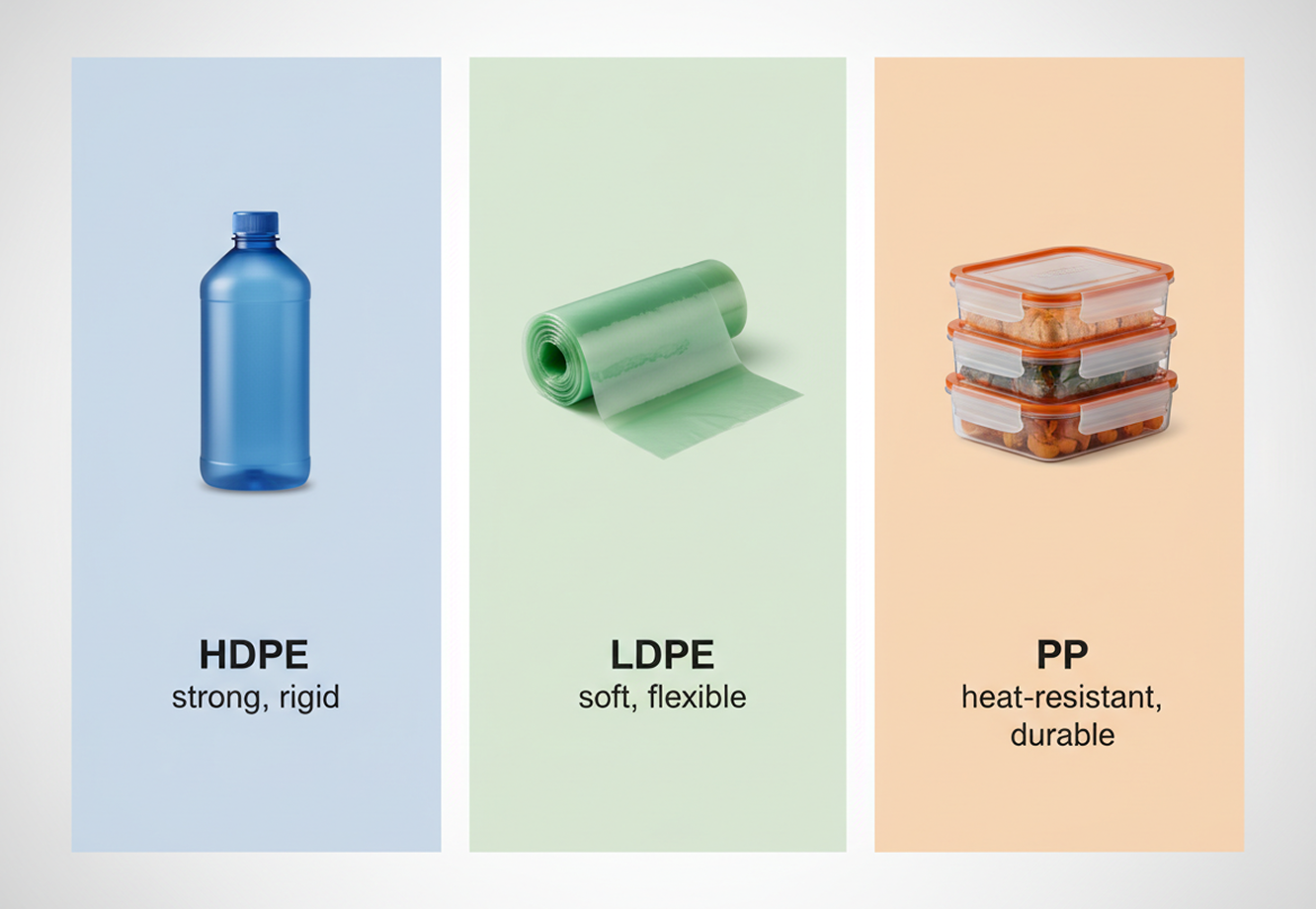
HDPE vs LDPE vs PP Comparison
| Feature | HDPE | LDPE | PP |
|---|---|---|---|
| Strength | High | Medium | Medium-High |
| Flexibility | Low | High | Low |
| Transparency | Low | Medium | High |
| Print clarity | Medium | Medium | High |
| Heat sealing | Good | Excellent | Good |
| Moisture resistance | Good | Good | Good |
| Cold resistance | Good | Excellent | Medium |
| Cost efficiency | High | High | Medium |
| Common usage | Carrier bags | Flexible bags | Retail packaging |
Which Material Is Best for Different Products?
| Product Type | Recommended Material |
|---|---|
| Supermarket bags | HDPE |
| Produce rolls | HDPE |
| Rice and flour | LDPE or PE laminate |
| Frozen seafood | PA/PE laminate |
| Frozen meat | PA/PE laminate |
| Bakery packaging | LDPE or PP |
| Snack packaging | PP or PE+PE |
| Pet food | PE/PE or PP/PE |
| Fertiliser bags | PP/PE or PE/PE |
| Garbage bags | HDPE or LDPE |
Each product behaves differently under weight, moisture, and temperature conditions, which is why material selection must follow application needs.
Is HDPE Stronger Than LDPE?
HDPE has higher tensile strength.
LDPE has better flexibility and stretch resistance.
In real use, “stronger” depends on what failure means:
- For load support: HDPE performs better
- For stretching and impact handling: LDPE performs better
So strength depends on usage condition, not just material name.
Which Plastic Material Is Best for Food Packaging?
Food packaging depends heavily on moisture, oxygen, and temperature exposure.
- Dry food: LDPE, PP, or laminated PE
- Frozen food: PA/PE or PE-based multilayer film
- Vacuum packaging: PA/PE for barrier performance
- Fresh produce: HDPE produce roll for breathability and handling efficiency
Food packaging is usually determined by shelf-life requirement rather than material preference.
Which Materials Are Recyclable?
Recyclability depends on both material type and local recycling infrastructure.
- HDPE: widely recyclable in PE stream
- LDPE: recyclable in PE stream, but film recycling availability varies
- PP: recyclable in PP stream where collection systems exist
- PE+PE: designed for recyclability within PE stream
- PP+PP: recyclable within PP stream
- PET/PE laminate: limited recyclability due to mixed materials
- PA/PE laminate: limited recyclability in standard mechanical recycling systems
Single-material structures generally offer better recyclability in real-world collection systems, especially where sorting infrastructure is limited.
How Manufacturers Choose the Right Material
Material selection in production follows a structured evaluation process:
1. Product Requirements
Dry, frozen, wet, oily, or high-barrier products each require different structures.
2. Load and Thickness Needs
Heavy-duty packaging requires higher strength films and thicker gauges.
3. Storage and Transport Conditions
Ambient, chilled, or deep-freeze environments affect material choice.
4. Packaging Method
Manual packing, semi-automatic, or fully automated lines require different film performance.
5. Cost vs Performance Balance
Material choice always balances durability, performance, and cost efficiency.
How Enrich Helps Businesses Select Materials
In practice, material selection is based on actual application details.
When reviewing a project, the typical information required includes:
- Product type
- Fill weight
- Storage condition
- Packaging method
- Printing requirement
- Estimated quantity
With this information, suitable material and structure can be matched based on real usage conditions.
Frequently Asked Questions (FAQs)
What is the difference between HDPE, LDPE, and PP plastic?
HDPE is stiffer and stronger for its weight, LDPE is softer and more flexible, while PP is more rigid and offers better clarity. Each material is used for different packaging applications depending on product requirements such as strength, flexibility, and appearance.
What is the difference between PE and PP?
PE (polyethylene) is more flexible and widely used in bags and films, while PP (polypropylene) is more rigid and offers better clarity. PE is more common in flexible packaging applications.
Which plastic material is best for packaging?
There is no single best material. HDPE is commonly used for carry bags, LDPE for flexible packaging, and PP for premium retail packaging. The right choice depends on product type, weight, and storage conditions.
Is HDPE better than LDPE?
Neither is better overall. HDPE is stronger and more rigid, while LDPE is more flexible and stretchable. The best option depends on whether your packaging needs structure or flexibility.
Which plastic is best for food packaging?
Food packaging depends on the product type. Dry food often uses PE-based or laminated materials, while frozen food typically requires PA/PE for barrier and cold resistance. Fresh produce commonly uses HDPE film or perforated bags.
Which plastic is used for frozen food packaging?
Frozen food packaging commonly uses PA/PE (nylon/PE) laminate because it provides puncture resistance, moisture protection, and performance under low temperatures.
Is HDPE recyclable in Malaysia?
Yes, HDPE is widely recyclable in Malaysia and is commonly accepted in PE recycling streams, especially for rigid packaging and certain film applications.
What is the strongest plastic for packaging?
Strength depends on application. HDPE offers good stiffness for lightweight packaging, while PP provides rigidity, and laminated structures like PE/PE or PP/PE are used for heavy-duty packaging.
Can different plastic materials be combined in packaging?
Yes. Many packaging types use laminated structures such as PET/PE or PA/PE to improve barrier performance, strength, or print quality. However, mixed materials may reduce recyclability.
Is LDPE suitable for frozen food packaging?
LDPE alone is usually not sufficient for frozen food. It is often used as part of a laminate structure, while PA/PE is more commonly used for full frozen food barrier packaging.
How do I choose the right plastic material for my product?
It depends on your product type, fill weight, storage conditions, packaging method, sealing requirements, and whether branding or recyclability is needed.
If you’re unsure, share your product details with us and we’ll recommend the right material and structure for your application.
Why do different plastic materials have different properties?
Because each material has a different molecular structure, which affects flexibility, strength, clarity, sealing ability, and temperature resistance.
Need Help Choosing the Right Material?
Material selection depends on how the packaging will perform in real conditions, not just the material name.
Share your product details with our team, and we can recommend a suitable packaging material and structure based on your actual application requirements.
Disclaimer:
We hope you found this article informative. Our content is intended for general informational purposes only and does not constitute advice or necessarily reflect the full range of services offered by Enrich Package (Malaysia) Sdn. Bhd.
Readers are advised to consult with a qualified industry professional and contact our experts for packaging recommendations specific to their individual business needs. While we strive for accuracy and completeness in our blog posts, we cannot guarantee they are error-free. Enrich Package (Malaysia) Sdn. Bhd. assumes no responsibility for any errors or omissions.