
Recyclable Plastic Bag Manufacturer Malaysia
Monomaterial PE+PE & PP+PP Recyclable Packaging Solutions
Enrich Package (Malaysia) Sdn. Bhd. is a HACCP and ISO 9001:2015 certified plastic bag manufacturer in Malaysia with over 19 years of flexible packaging manufacturing experience. We produce recyclable plastic bags, monomaterial flexible pouches, and recyclable laminated packaging using PE+PE (monomaterial polyethylene) and PP+PP (monomaterial polypropylene) structures, supplying businesses across retail, food manufacturing, agriculture, and industrial sectors in Malaysia and export markets.
Many conventional laminated plastic bags and pouches remain difficult to recycle because they combine multiple incompatible polymer layers within a single structure. While these multilayer laminates may offer strong barrier performance, they are generally not compatible with standard mechanical recycling systems.
Monomaterial packaging addresses this challenge by engineering every layer from the same polymer family. This allows the entire structure to remain within standard PE or PP recycling streams without the need for material separation, depending on local recycling infrastructure and collection systems.
For businesses with ESG reporting obligations, sustainability procurement requirements, or export markets with recyclability regulations, our monomaterial PE+PE and PP+PP bags and pouches provide a packaging structure with a specific, documentable recyclability basis rooted in material composition rather than general sustainability claims.
Looking for a Recyclable Plastic Bag Manufacturer in Malaysia?
Tell us your bag type, application, and required quantity. We will confirm whether PE+PE or PP+PP monomaterial packaging is suitable and provide a competitive quote.
WhatsApp us today to discuss your recyclable packaging requirements.
What Is Monomaterial Packaging and Why Is It Recyclable?
Monomaterial packaging refers to packaging made entirely from a single polymer family, where every layer of the structure, including laminated layers, uses compatible material compositions.
In flexible plastic packaging, this typically includes:
- PE+PE (Polyethylene + Polyethylene)
- PP+PP (Polypropylene + Polypropylene)
Recyclability is strongly influenced by material consistency. Traditional single-layer plastic bags made from HDPE or LDPE are widely recyclable because the entire structure consists of one polymer type.
Challenges arise with conventional flexible packaging laminates, which combine different polymers such as PE+Nylon, PE+PET, or PE+BOPP. These structures are designed to improve barrier performance, mechanical strength, or printability. However, once bonded, the different polymer layers cannot be easily separated through standard mechanical recycling processes.
Monomaterial laminated packaging addresses this limitation by engineering every layer from the same polymer family. Although the structure still contains multiple laminated layers, the overall material remains within a single recycling stream.
A PE+PE laminated bag remains compatible with polyethylene recycling systems. A PP+PP laminated pouch remains compatible with polypropylene recycling systems, subject to local recycling infrastructure and collection systems.
Understanding Recyclability in Flexible Plastic Packaging
| Packaging Structure | Recyclability | Explanation |
|---|---|---|
| HDPE or LDPE Single Layer | Compatible with standard PE recycling streams | Single polymer structure, no separation required |
| PE+PE Monomaterial Laminate | Compatible with PE recycling streams | Both layers use polyethylene, allowing recycling within PE stream |
| PP+PP Monomaterial Laminate | Compatible with PP recycling streams | Entire structure remains within polypropylene family |
| PE + Nylon Conventional Laminate | Limited compatibility with standard recycling systems | Mixed polymers are difficult to separate after lamination |
| PE + PET / PE + BOPP Laminate | Limited compatibility with standard recycling systems | Typically requires specialized recycling infrastructure |
Why Recyclable Packaging Is Becoming More Important
Businesses are increasingly reviewing not only how packaging performs during use, but also what happens to the material after use.
This is particularly relevant as Malaysia continues moving towards broader Extended Producer Responsibility (EPR) implementation for packaging. Under EPR, producers take greater responsibility for the environmental impact and end-of-life management of packaging placed on the market.
For businesses currently using conventional mixed-material laminates, reviewing whether a recyclable monomaterial alternative can provide the required performance is one practical way to prepare for evolving packaging sustainability requirements.
However, switching materials should not be based on recyclability alone. Product protection, barrier requirements, sealing performance, storage conditions, shelf life, printing, and packaging machinery must still be considered.
PE+PE Packaging vs PP+PP Packaging: Which Monomaterial Structure Do You Need?
Both PE+PE and PP+PP are recyclable monomaterial structures available from Enrich Package. The appropriate structure depends on your product requirements, packaging format, storage conditions, filling process, and required packaging performance.
| Property | PE+PE Monomaterial Polyethylene | PP+PP Monomaterial Polypropylene |
|---|---|---|
| Recycling Stream Compatibility | Compatible with PE recycling streams | Compatible with PP recycling streams |
| Flexibility | Softer and more flexible with strong impact resistance | Stiffer structure with improved shape retention |
| Optical Clarity | Good clarity for natural or printed bags | Higher clarity for premium retail presentation |
| Heat Seal Performance | Excellent sealing performance at standard temperatures | Good sealing performance with slightly higher seal temperatures |
| Common Bag Applications | Carry bags, flat bags, roll-form bags, retail bags | Structured retail bags and shape-retaining bags |
| Common Pouch Applications | Dry food pouches, ambient food packaging, general flexible pouches | Snack packaging, confectionery, dry goods, premium display pouches |
| Sustainability Positioning | Monomaterial PE structure designed for recyclability | Monomaterial PP structure designed for recyclability |
Not sure which structure suits your application? Share your product type, filling method, storage conditions, and packaging requirements. Our team will recommend the appropriate monomaterial packaging structure for your application.
Monomaterial Plastic Pouch Solutions
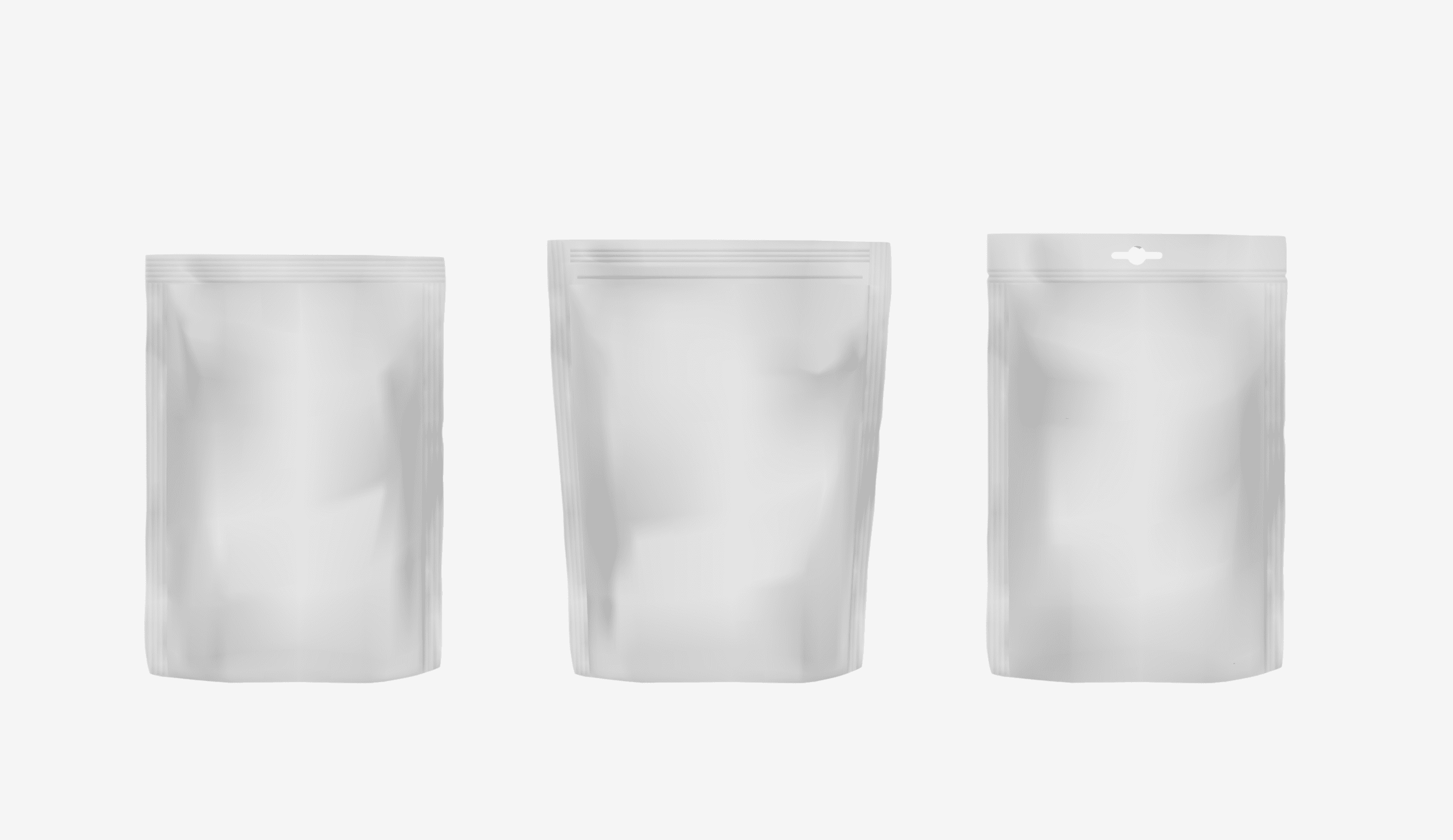
In addition to recyclable plastic bags, we manufacture monomaterial flexible pouches in PE+PE and PP+PP structures for food manufacturing, retail, and industrial applications.
Monomaterial pouches are designed for businesses evaluating alternatives to conventional multilayer laminate pouches such as PE+Nylon or PE+PET, particularly where recyclability is a key consideration while maintaining practical packaging performance.
Depending on product requirements, monomaterial pouch structures can be suitable for a range of applications where barrier requirements can be met within a single polymer family system.
Applications
Monomaterial PE and PP pouches are commonly used for:
- dry food packaging
- frozen food packaging
- snack packaging
- powder products
- household products
- refill packaging
- industrial flexible pouches
Available Pouch Formats
Depending on application and production requirements, available formats include:
- stand-up pouches
- flat pouches (3-side seal)
- side gusset pouches
- pillow pouches (centre seal)
- rollstock films for automated packaging applications (subject to specification and machine compatibility)
- custom printed flexible pouches (multi-colour printing depending on design requirements)
Specification Evaluation
Before recommending a monomaterial pouch structure, our team conducts a technical evaluation to ensure suitability for real production and end-use conditions.
This helps determine whether a PE+PE or PP+PP structure can meet both functional and recyclability requirements.
Key evaluation parameters include:
- product fill weight and dimensional requirements
- sealing temperature range and packaging equipment compatibility (pre-made pouch or automated packaging applications)
- storage conditions (ambient, chilled, or frozen environments)
- puncture and drop resistance during handling and logistics
- required shelf life and product stability expectations
- transportation and distribution conditions, including stacking and compression
- barrier performance requirements (oxygen and moisture barrier, and product aroma retention where applicable)
- ink adhesion and print durability for branding applications
Based on these parameters, we assess whether a monomaterial PE+PE or PP+PP structure is suitable, or whether a hybrid or conventional laminate is required for specific performance demands.
For automated packaging applications, material compatibility with form-fill-seal systems or rollstock-based processes can be evaluated based on specification and machine requirements.
For accurate recommendations, please share your product specifications with our team so we can advise on the most suitable packaging structure.
Recyclable Laminated Packaging vs Conventional Laminated Packaging
| Recyclable Monomaterial Laminate | Conventional Mixed-Material Laminate | |
|---|---|---|
| Material Structure | All layers use the same polymer family | Multiple polymer types bonded together |
| Recycling Compatibility | Compatible with PE or PP recycling streams | Often requires specialist recycling infrastructure |
| Recycling Practicality | More suitable for standard recycling systems | Limited compatibility with conventional recycling systems |
| ESG Documentation | Material composition can support recyclability documentation | Recycling claims depend on specialist recovery availability |
| Typical Applications | Retail bags, dry food packaging, flexible pouches, industrial bags | High-barrier food packaging and specialty applications |
Many businesses begin transitioning gradually by replacing high-volume, lower-barrier packaging applications first, while continuing to use conventional high-barrier laminates only where technically necessary.
Contact us to discuss a phased approach for your packaging range.
Recyclable vs Biodegradable Plastic Bags: Understanding the Difference
Recyclable and biodegradable plastics are often discussed together, but they represent different technologies with different end-of-life processes.
| Recyclable Monomaterial PE/PP | Biodegradable Plastic | |
|---|---|---|
| End-of-Life Process | Material is collected, processed, and reused | Material is designed to break down under specific conditions |
| Infrastructure Requirement | Standard recycling systems | Industrial composting or controlled degradation conditions |
| Resource Recovery | Plastic material may be reprocessed into new products | Material breaks down rather than being recovered |
| Sustainability Approach | Supports recycling and material circularity | Focuses on decomposition |
| Verification Basis | Based on material composition compatibility | Depends on appropriate disposal and processing conditions |
Enrich Package supplies both recyclable monomaterial packaging and biodegradable carry bag options depending on customer requirements and application suitability.
For a more detailed comparison, read our article: 100% Recyclable Plastic Bags: A Smarter Packaging Choice for Modern Businesses
Who Should Transition to Monomaterial Recyclable Packaging?
Businesses with ESG or Sustainability Reporting Requirements
Businesses required to report on packaging sustainability increasingly need packaging claims that are specific, documentable, and auditable. Monomaterial PE+PE and PP+PP structures provide clearer recyclability positioning based on material composition.
Retailers & Supermarkets Responding to Plastic Bag Regulations
Malaysia’s state-level plastic bag regulations continue evolving alongside the national Roadmap Towards Zero Single-Use Plastics initiative.
Retailers looking to maintain plastic bag functionality while improving packaging sustainability may consider recyclable monomaterial carry bags as part of their transition strategy.
Read more: Single-Use Plastic Bag Bans in Malaysia — What Retailers Need to Know
Food Manufacturers Reviewing Packaging Sustainability
Food manufacturers currently using conventional multilayer laminates for dry food or ambient packaging applications may explore whether monomaterial PE or PP alternatives can meet their operational requirements.
Suitability depends on:
- barrier requirements
- shelf-life expectations
- sealing performance
- transportation conditions
- product sensitivity
Brand Owners & Exporters Supplying Regulated Markets
Businesses exporting to markets with increasing packaging sustainability requirements may require packaging structures that better align with recyclability frameworks and Extended Producer Responsibility (EPR) initiatives.
Businesses Replacing Existing Non-Recyclable Laminated Bags
If your current packaging uses mixed-material laminates, our team can assess whether a monomaterial PE or PP structure may be suitable as a replacement option based on your packaging specifications.
Our Recyclable Monomaterial Packaging Products
Recyclable Flexible Printed Laminated Packaging
Our heavy-duty printed bags can be produced using monomaterial PE+PE or PP+PP laminated structures designed to support recyclability objectives while maintaining durability and print performance.
Applications include:
- fertiliser packaging
- potting soil packaging
- pet food packaging
- industrial heavy-duty bags
View product details: Printed Heavy-Duty Packaging for Fertiliser, Soil & Pet Food
Why Choose Enrich Package for Recyclable Plastic Bags in Malaysia
Proven Flexible Packaging Manufacturing Experience
- HACCP & ISO 9001:2015 certified manufacturing
- 19+ years of flexible packaging manufacturing experience
- 500+ completed projects across retail, food, agriculture, and industrial sectors
- 100+ clients in Malaysia and export markets
- Export supply capability across Asia Pacific, Africa, America, and Europe
- SME100 award recipient
ISO 9001:2015 & HACCP Certified
Our manufacturing operations are supported by recognized quality management and food safety certifications.
Custom Manufacturing Capabilities
We provide:
- custom printed packaging
- laminated flexible packaging
- heavy-duty industrial bags
- retail plastic bags
- recyclable monomaterial packaging
- flexible pouch manufacturing
Sustainable Packaging Development
We continue developing recyclable and sustainable packaging solutions aligned with evolving market requirements and packaging sustainability initiatives.
Frequently Asked Questions (FAQs)
What is monomaterial plastic packaging?
Monomaterial plastic packaging is packaging made entirely from a single polymer family, such as polyethylene (PE) or polypropylene (PP). In flexible packaging, this typically includes PE+PE or PP+PP structures, where all layers are designed to remain within the same recycling stream.
Are PE+PE and PP+PP plastic bags recyclable?
PE+PE and PP+PP structures are designed to be compatible with standard polyethylene and polypropylene recycling streams. However, actual recyclability depends on local recycling infrastructure, collection systems, and sorting capabilities.
What is the difference between monomaterial and conventional laminated packaging?
Monomaterial packaging uses one polymer family across all layers, making it more compatible with mechanical recycling systems. Conventional laminated packaging combines different polymers such as PE+Nylon or PE+PET, which are difficult to separate during recycling and may have limited recyclability.
Can monomaterial packaging replace traditional laminated pouches?
Monomaterial packaging can replace conventional laminated pouches in many applications, especially for dry goods, ambient products, and some frozen food applications. However, suitability depends on barrier requirements, shelf life expectations, and product sensitivity.
What products are suitable for monomaterial plastic pouches?
Monomaterial PE and PP pouches are commonly used for dry food, snacks, powders, frozen food, household products, refill packaging, and industrial applications. Final suitability depends on product specifications and packaging performance requirements.
Do you provide custom printed monomaterial packaging?
Yes. Monomaterial pouches and bags can be custom printed depending on design requirements, branding needs, and production specifications. Printing options depend on material type and packaging structure.
How do I know if PE+PE or PP+PP is suitable for my product?
The choice depends on product characteristics such as fill weight, sealing conditions, storage environment, and required barrier performance. Our team evaluates these factors before recommending the most suitable monomaterial structure.
Can monomaterial packaging be used for automated packing lines?
Monomaterial packaging such as rollstock films can be evaluated for compatibility with form-fill-seal (FFS) systems depending on machine requirements and packaging specifications.
Discuss Your Recyclable Packaging Requirements
Looking for a recyclable plastic bag manufacturer in Malaysia? Whether you require PE+PE recyclable bags, PP+PP monomaterial pouches, recyclable flexible packaging, printed laminated bags, industrial heavy-duty packaging, or retail recyclable bags, our team can help assess the most suitable packaging structure for your application.
Simply share your product type, packaging format, filling process, and estimated quantity requirements, and we will recommend an appropriate recyclable packaging solution based on your needs.